Convento Bosco ai Frati
San Piero a Sieve · Scarperia e San Piero · Firenze
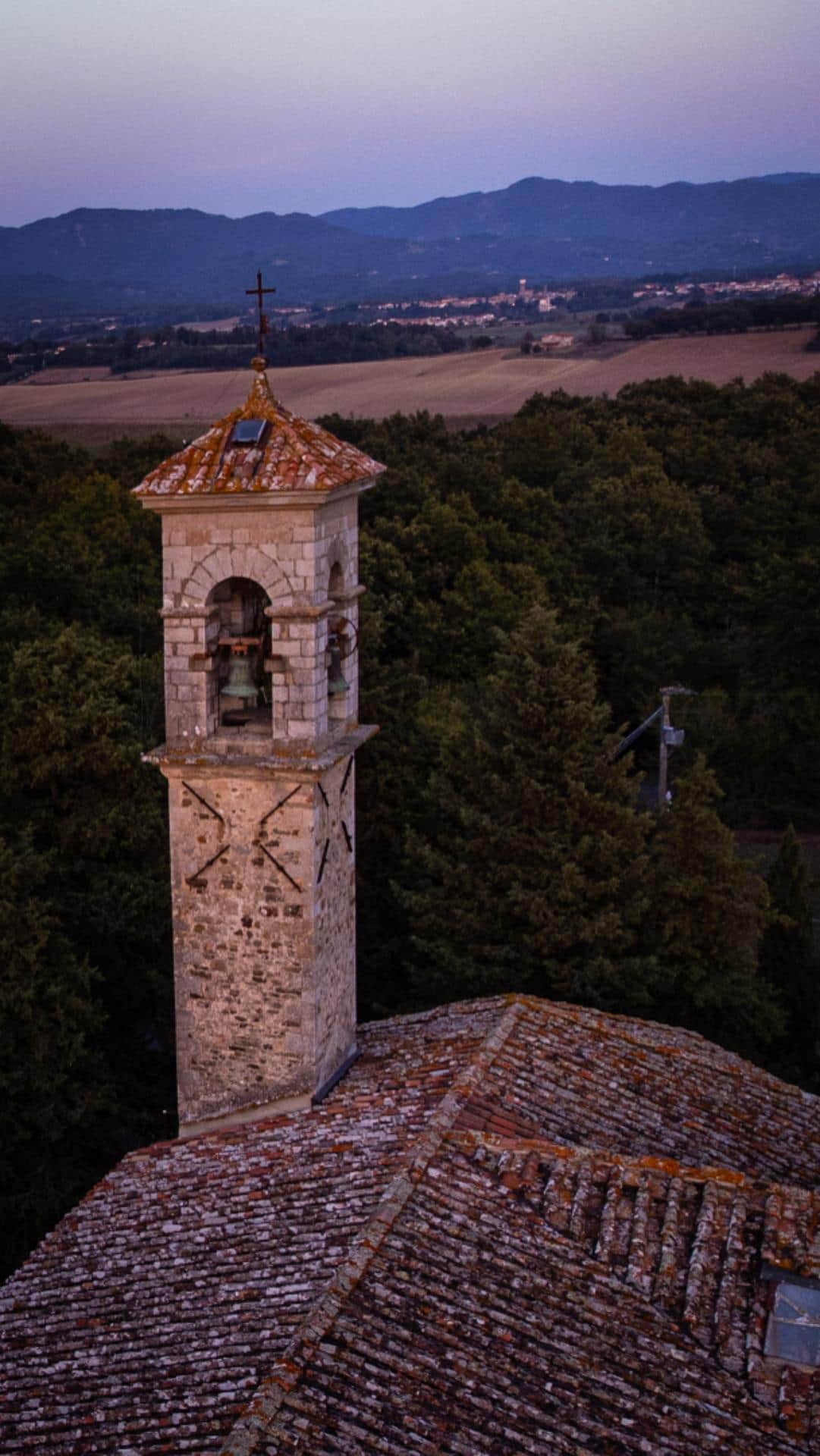
In an open space surrounded by a forest of turkey oaks, along a municipal road between San Piero a Sieve and Galliano, stand the Church and Convent of San Bonaventura in Bosco ai Frati.
Structure:
The complex, as we see it today, dates back to the first half of the 15th century, when Cosimo de' Medici commissioned his personal architect, Michelozzo, to rebuild the church, which replaced the original structures dating back to the 7th century. This has a single nave, divided into four modules, marked by the pillars that support the cross vaults on the ceiling.
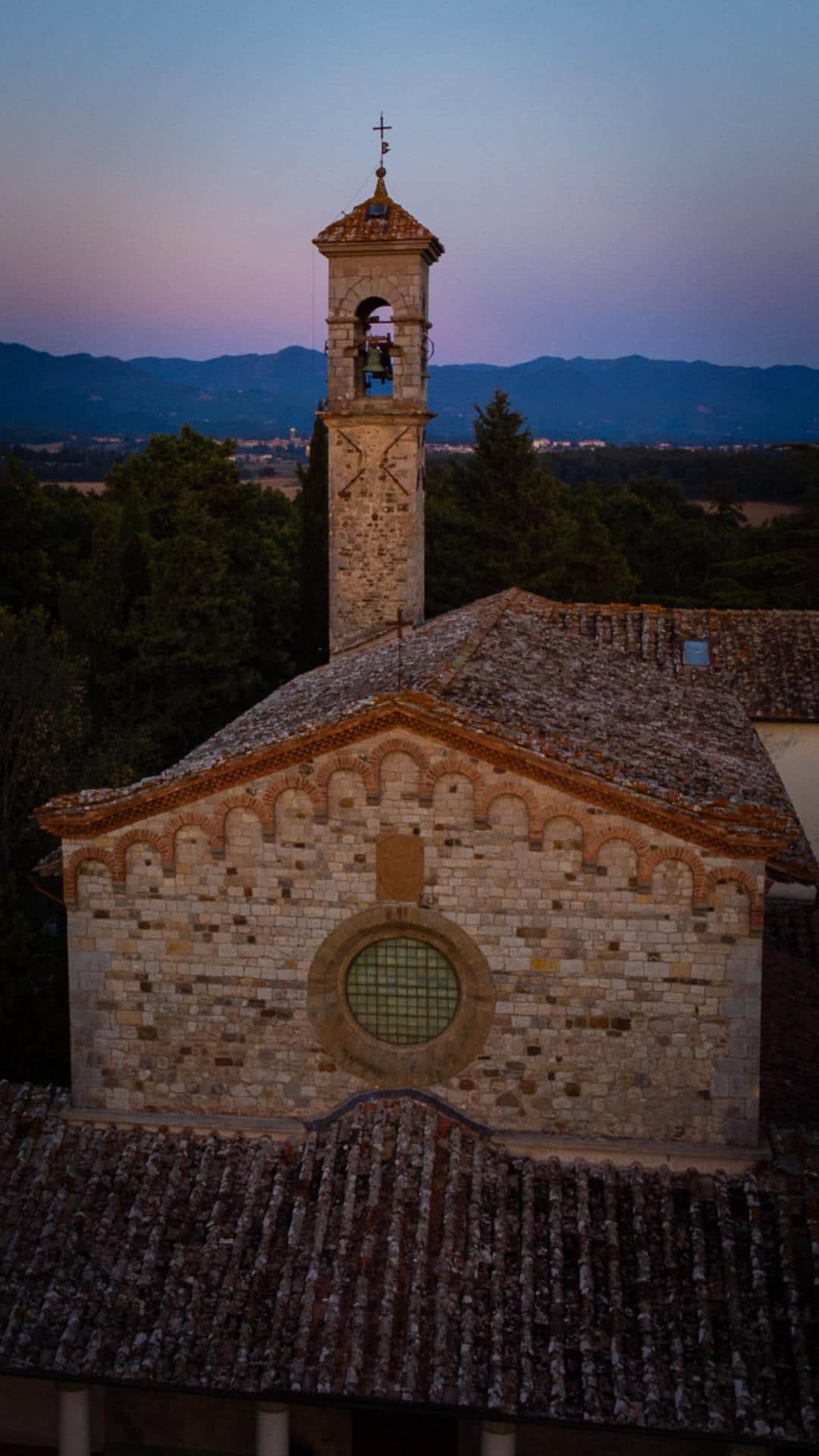
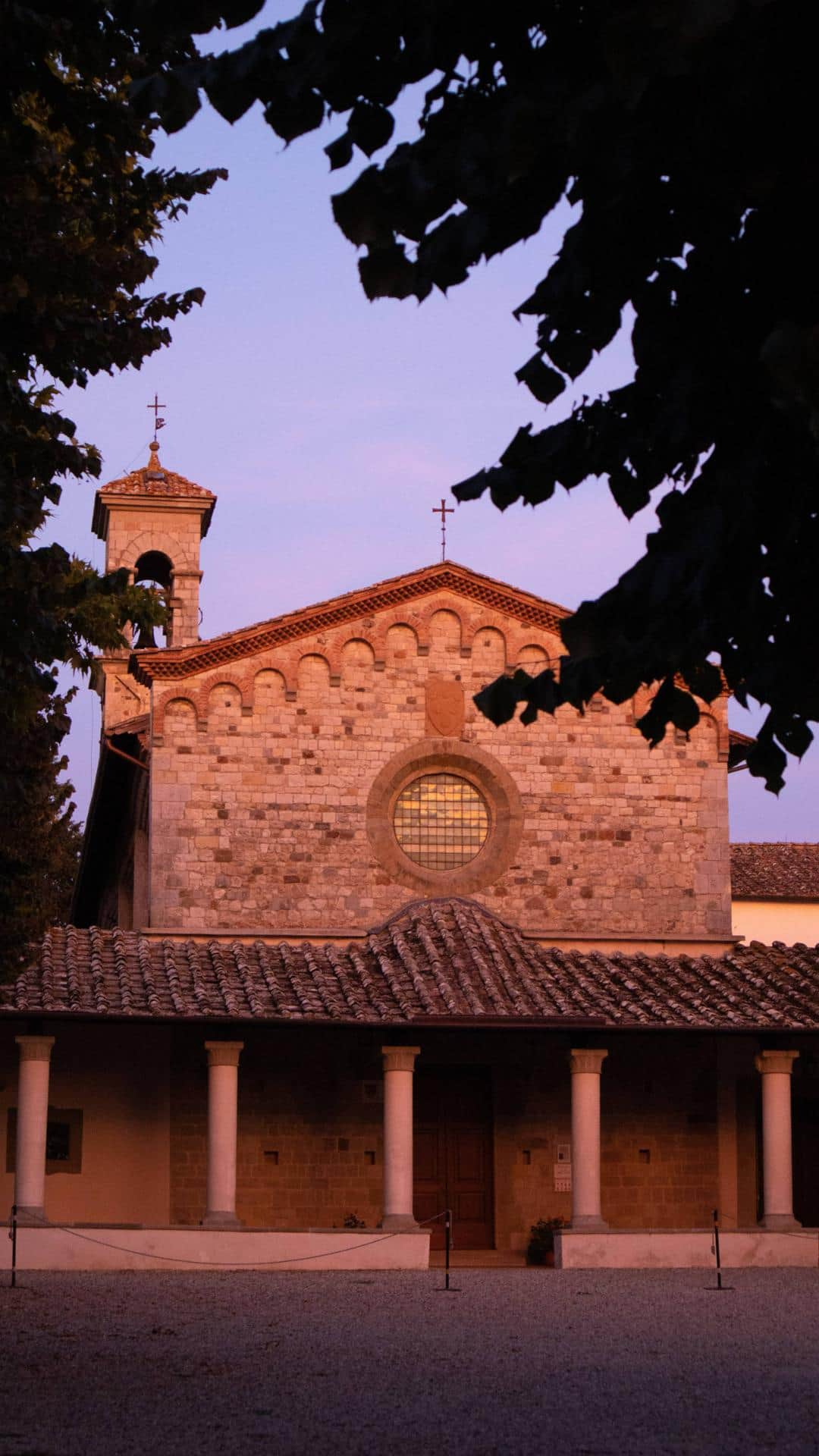
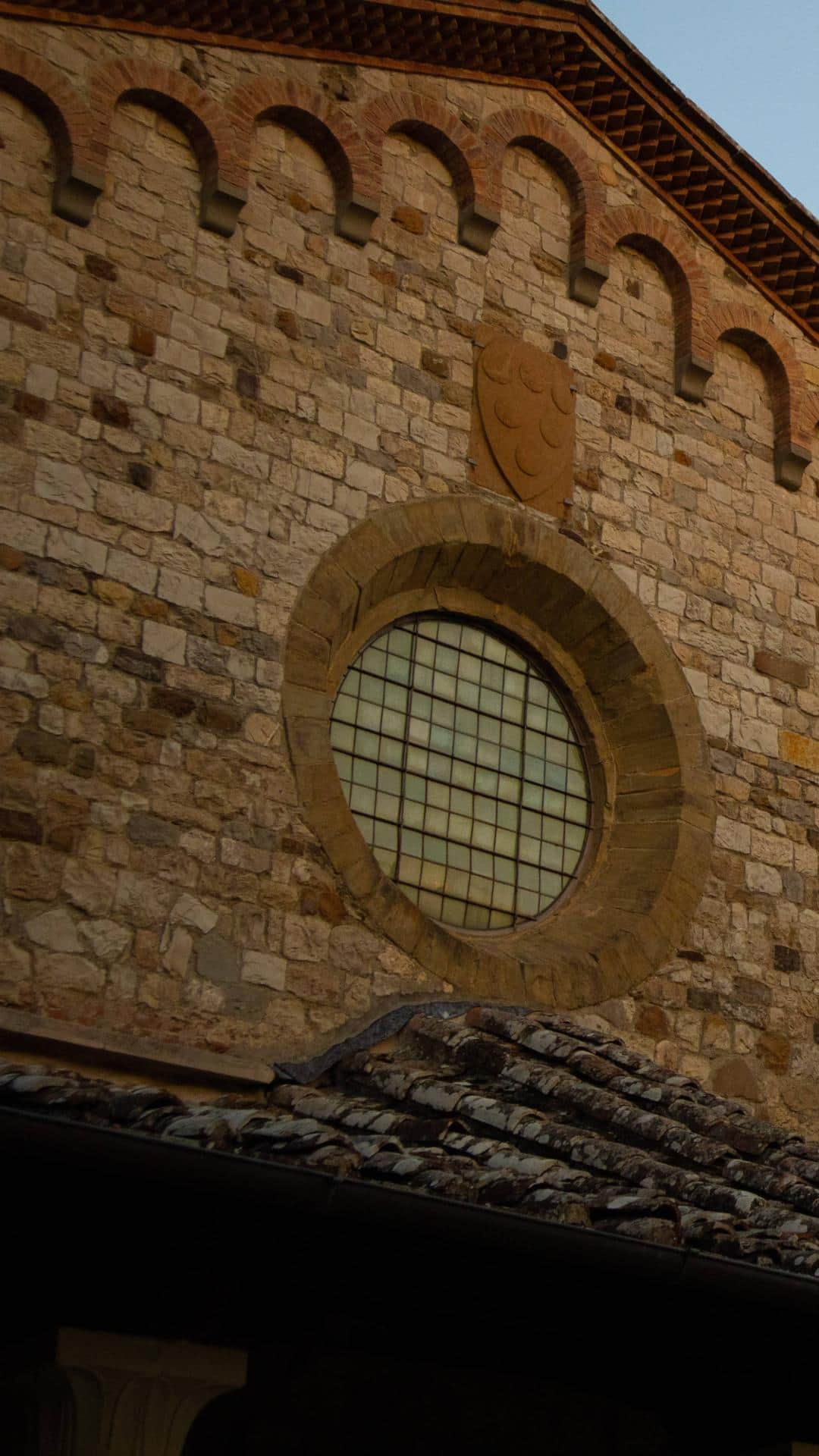
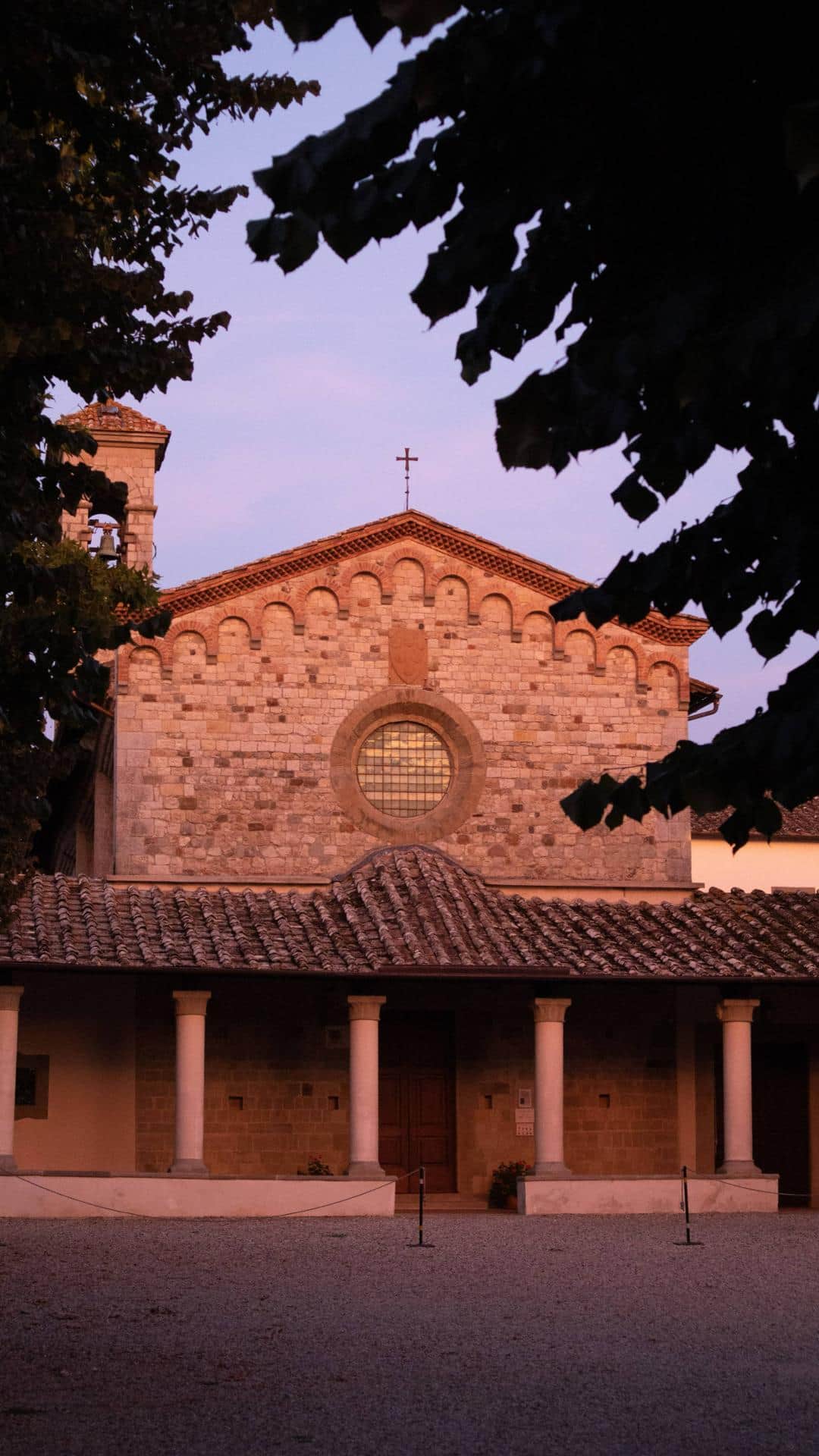
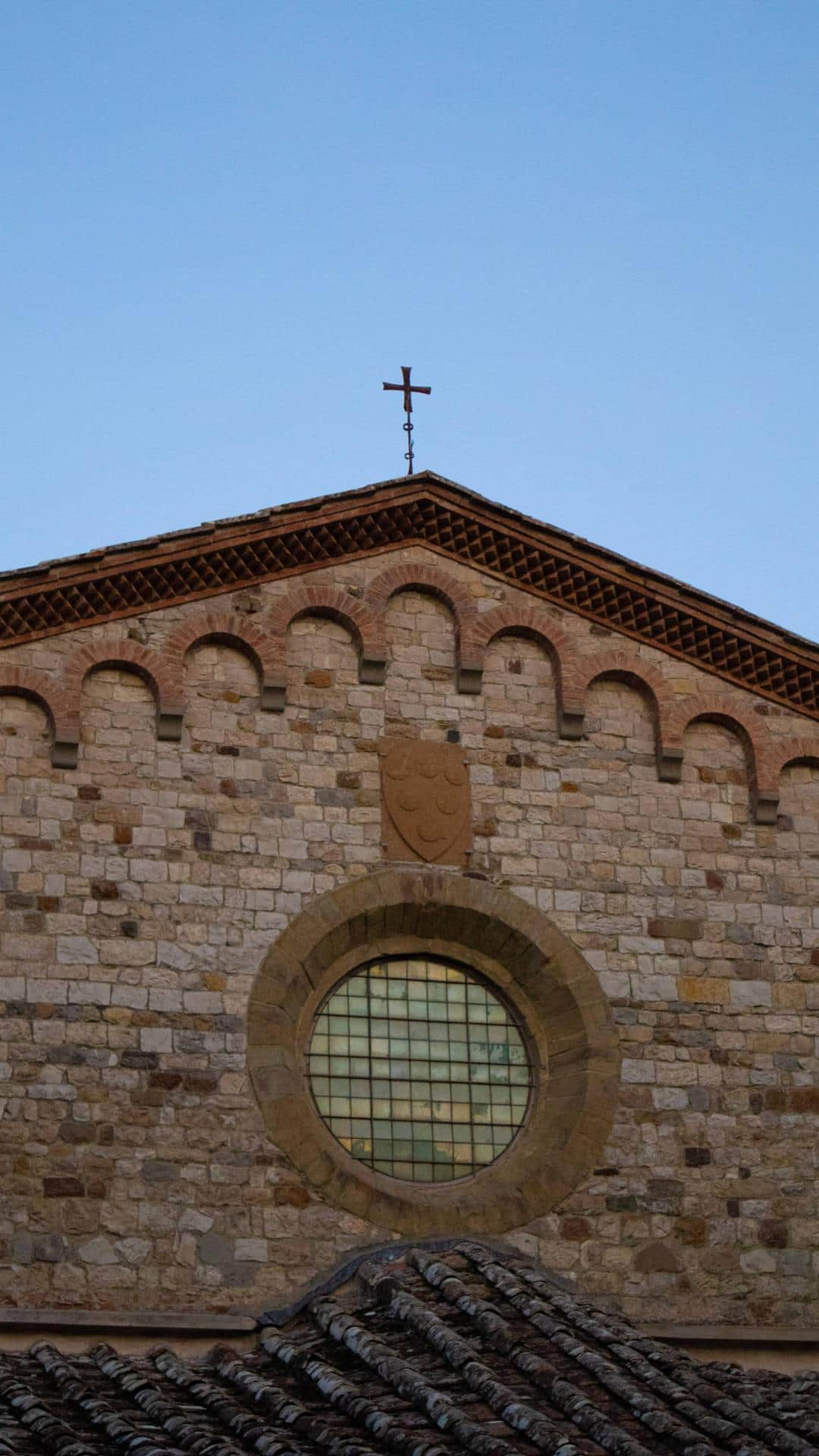
The façade is marked by rows of exposed stonework, with a rose window in the center surmounted by the Medici coat of arms. The church is accessed from the loggia supported by columns with plastered shafts, sandstone bases and capitals with carved decorations above.
The façade is distinguished by rows of exposed stonework, with a rose window in the center surmounted by the Medici coat of arms. The church is accessed from the loggia supported by columns with plastered shafts, sandstone bases and capitals with carved decorations above.
The cloister was closed in 1611 to protect against the winter cold. Inside we find the cistern that collects rainwater for the daily needs of the convent. In the kitchen garden, on the other hand, there is a well with a roof supported by exposed brick columns.
The two best-known paintings belonging to Bosco ai Frati were both transferred to Florence in the late 18th century. They are the so-called "Pala di Bosco ai Frati," by Beato Angelico, and "The Triptych. Resurrection of Lazarus" painted by Nicolas Froment. Other works are preserved in the spaces of the convent. A small museum of sacred art has been set up in the "Chapter Room" since 1972, where the wooden Crucifix attributed to Donatello is kept, although there are no documents ascertaining its provenance.
Historical Notes:
The convent was founded by the Ubaldini family in the seventh century for friars of the order of St. Basil, who lived here until 1012. The departure of the Basilians ushered in a two-century-long period of neglect, which ended in the early 13th century with the donation of the convent to St. Francis, who prayed here. Sixty years later, St. Bonaventure would also frequent Bosco ai Frati - here he received news of his appointment as a cardinal.
The friary was abandoned again in 1349 due to the raging plague, until the Franciscans were invited to return by Cosimo de' Medici.
Under the aegis of the Medici, the convent flourished: in addition to Michelozzo's works, works of art and priceless mined volumes arrived.
In the nineteenth century, like many similar entities, the Franciscans suffered the Napoleonic and Savoyard persecutions, with the suppression of religious orders and the confiscation of their property. Thus, the friars were removed from Bosco ai Frati, but only for a short time: in 1870, in fact, the Guerini marquises bought the convent and its property, auctioned off by the institutions after the confiscation, and invited the legitimate owners to return. In 1949 Bosco ai Frati was donated to the Tuscan Province of the Order of Friars Minor.
-Giulio Landi