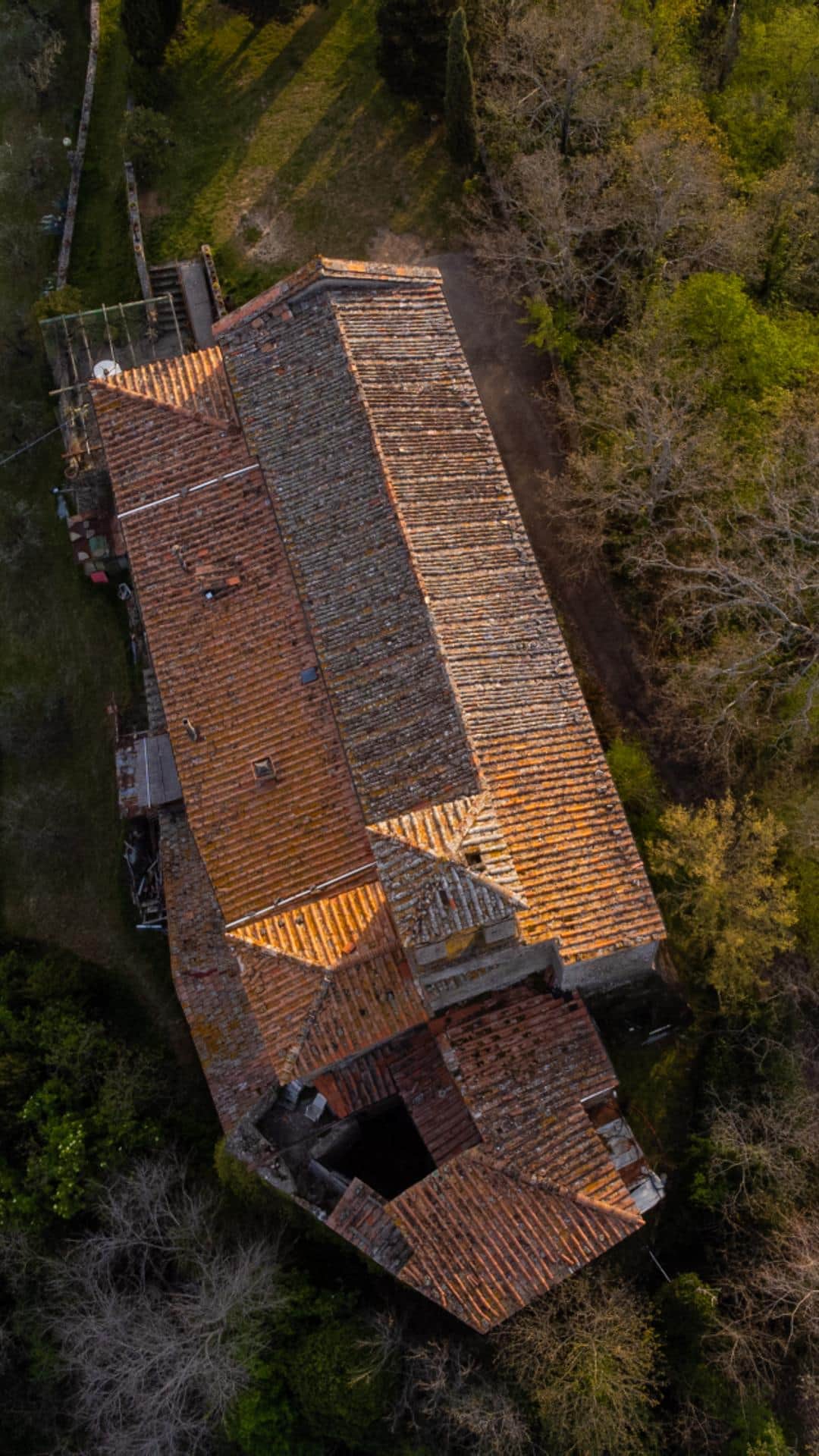
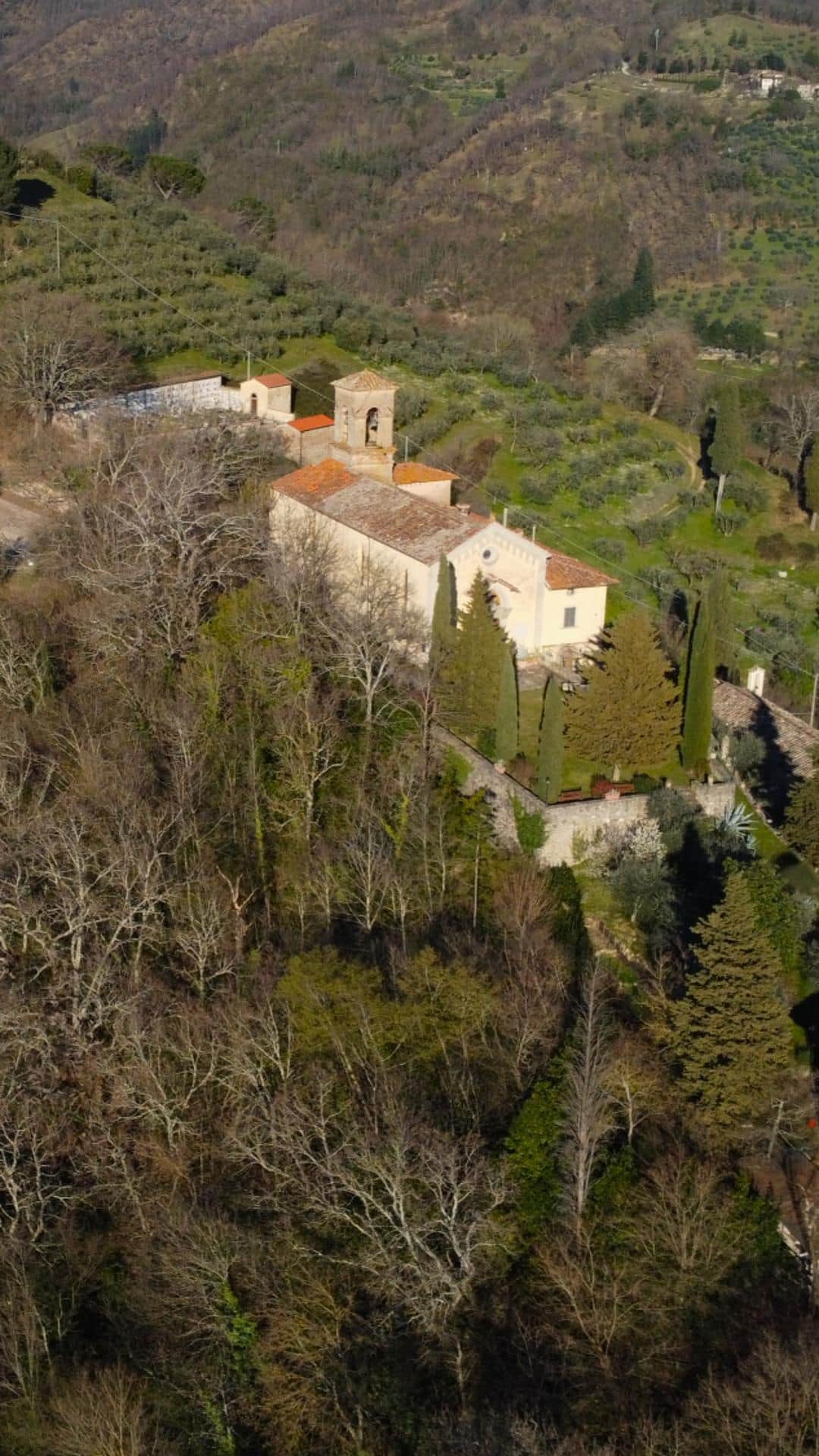
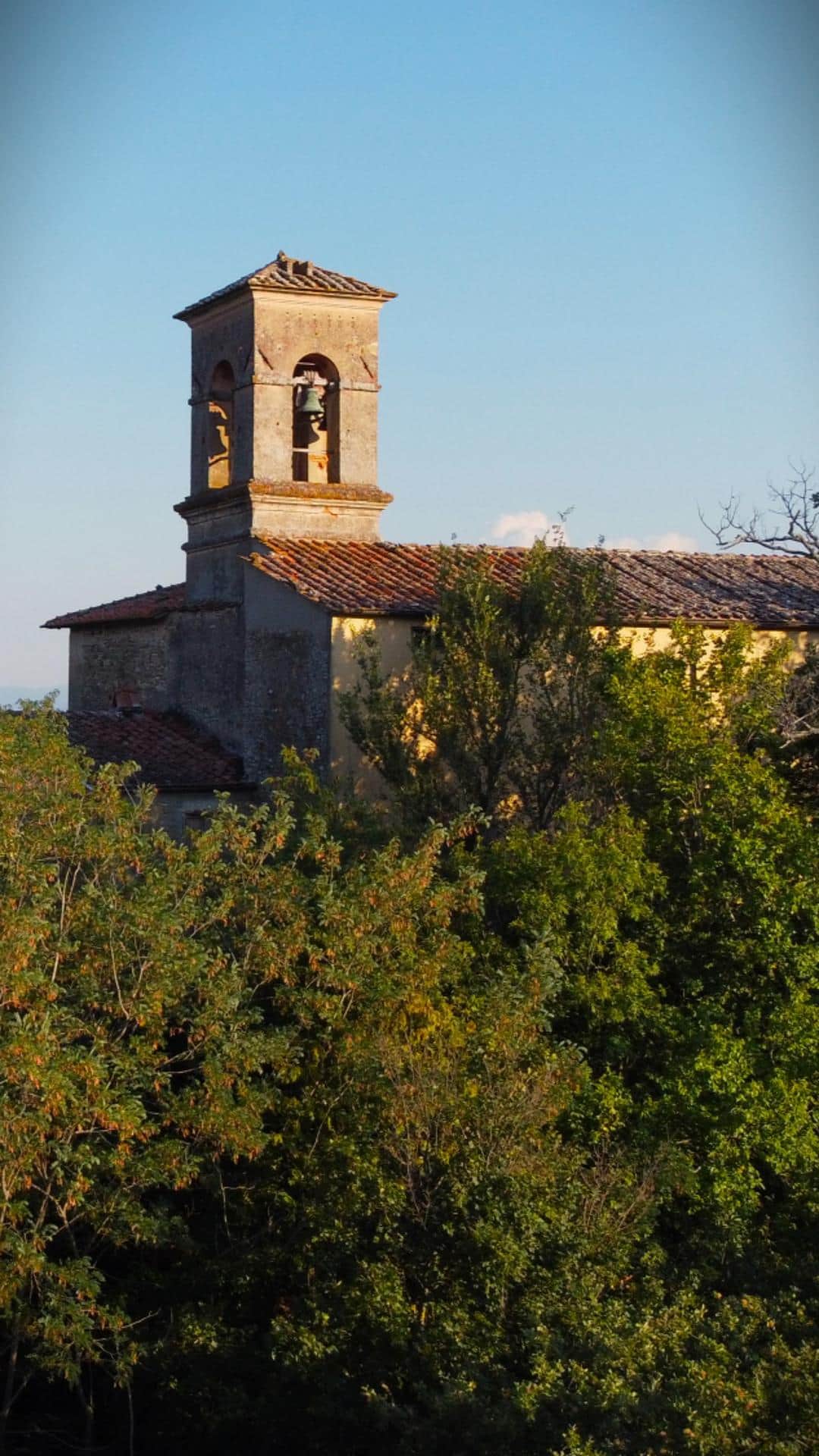
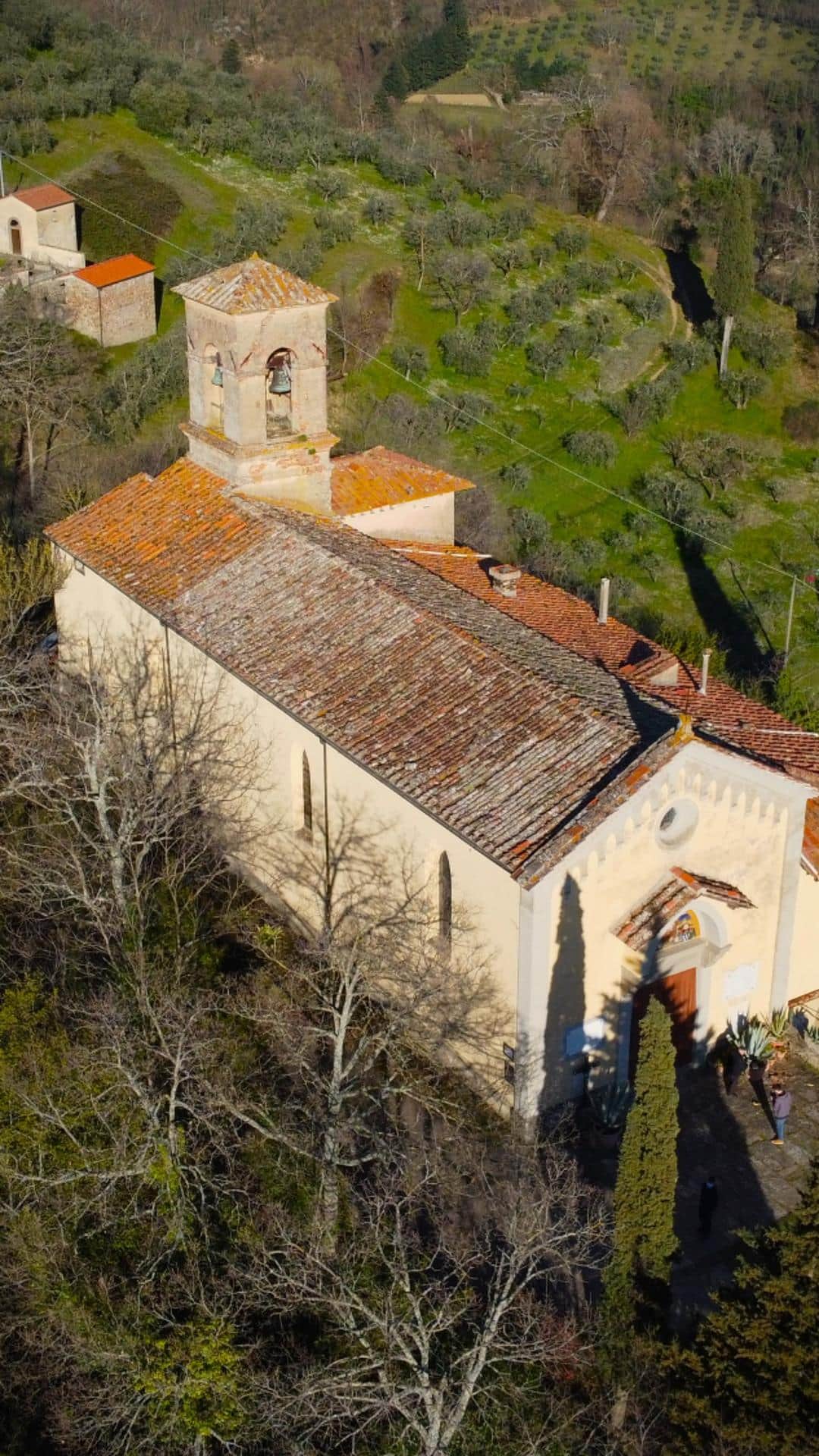
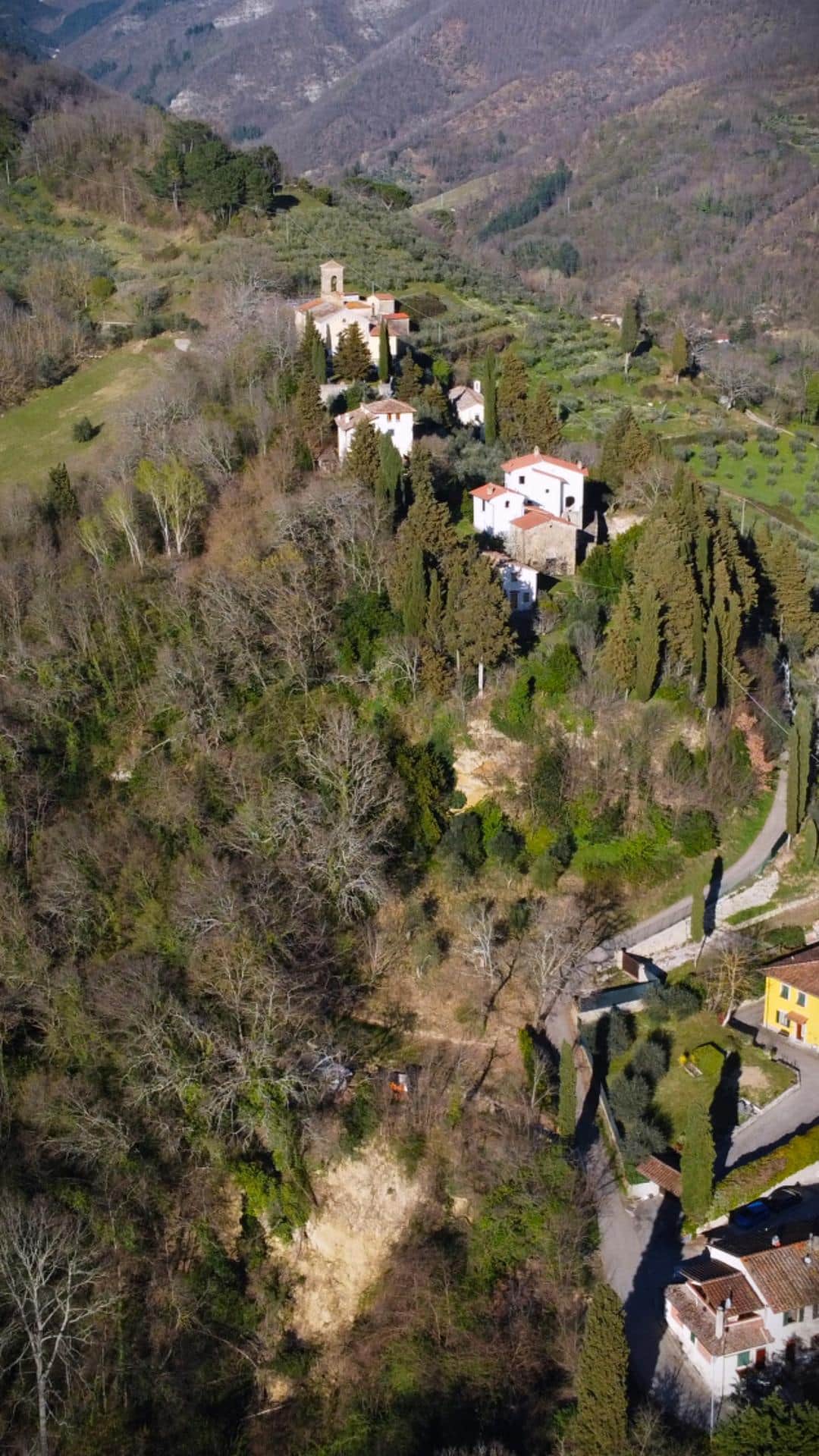
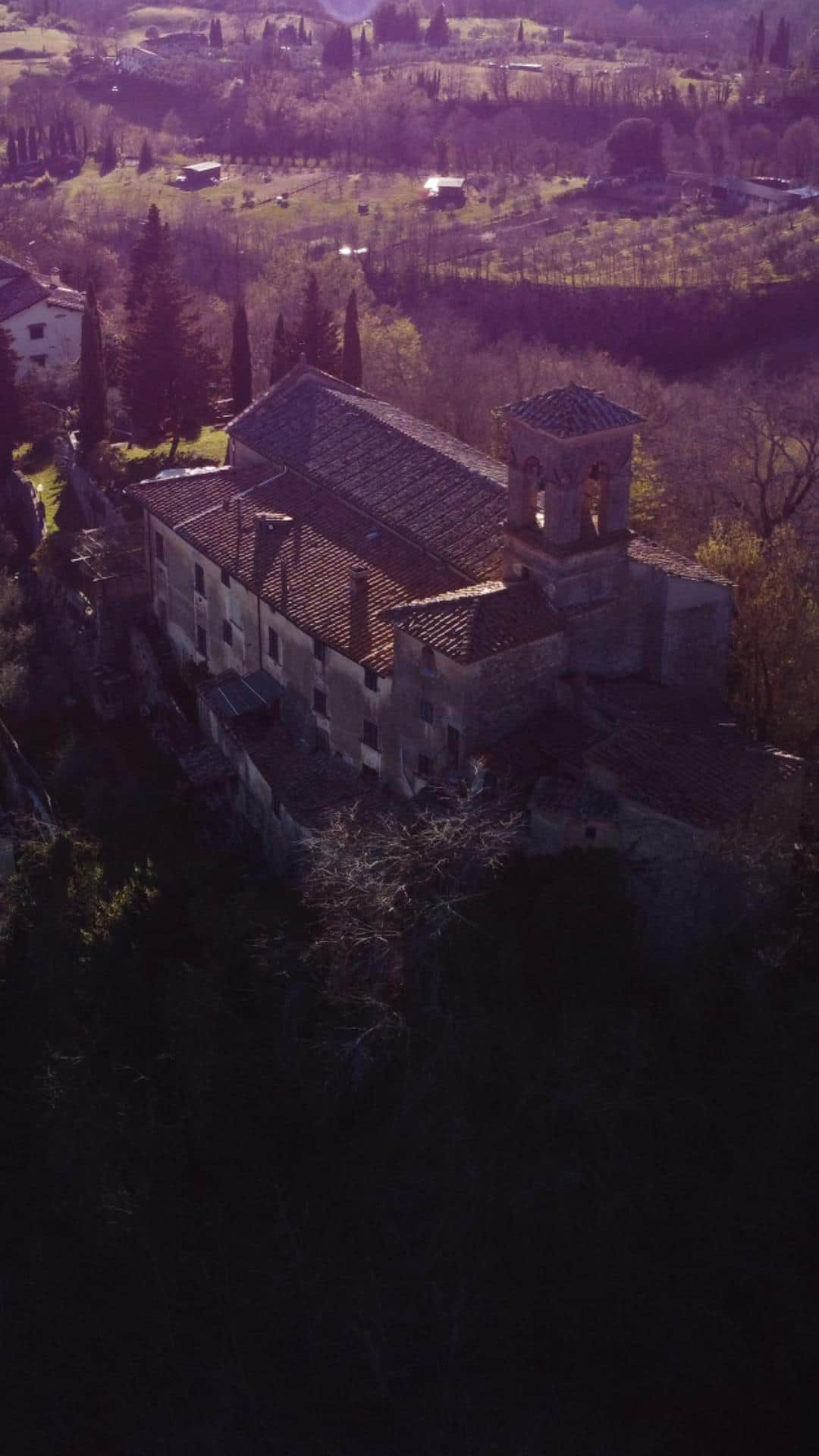
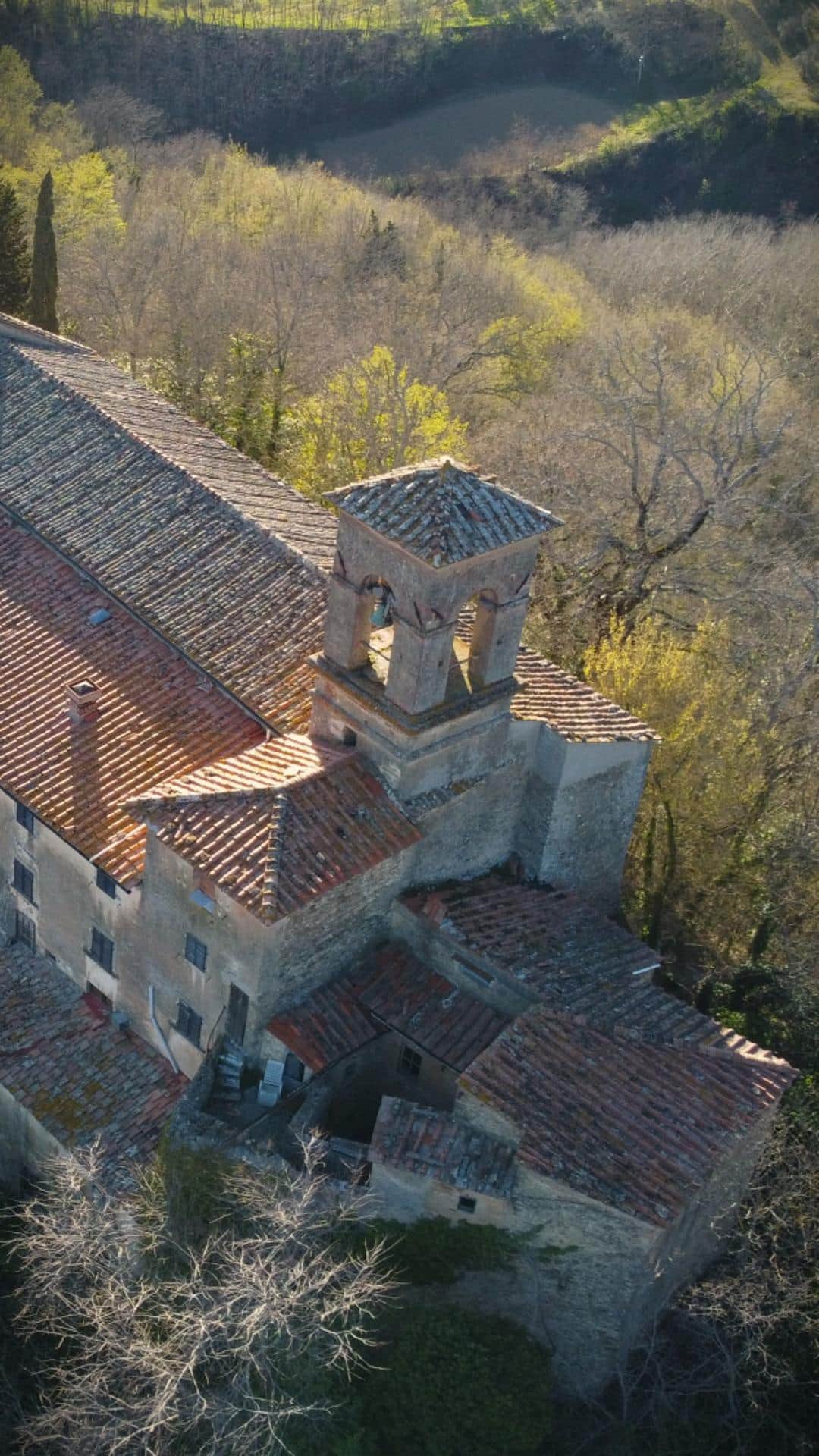
The beautiful Church of Santa Maria a Pulicciano is located in Ronta, in the municipality of Borgo San Lorenzo in one of the most scenic places in the entire Mugello region.
Structure:
This religious building stands on the ancient foundations of the castle and dates back to 1220, a period when the Ubaldini family acquired the Castrum et curam Pulicciani from Frederick II. Reconstructed in 1478 and subsequently restored, the current structure dates back to the late 19th century and was reopened for worship in 1908 after being adorned inside by the Chini family. In 1927, the lunette on the facade was inaugurated, crafted by the Fornaci San Lorenzo. This polychromatic majolica lunette depicts the Assumption, with the background displaying the ancient castle of Pulicciano. The facade's design was conceived by the Genoese architect Riccardo Haupt.
The millennia-old history of Santa Maria a Pulicciano began in 1220 when the church was built as a strategic place of worship, an integral part of the Pulicciano fortress owned by the Ubaldini family. After the transition to the Florentine Republic in 1254, the church witnessed armed conflicts and played a fundamental role in the growth and defense of civic power. In the 17th century, Don Lorenzo Pananti initiated a conservative and restructuring intervention, renewing the interior furnishings. In the 19th century, Prior Gioacchino Materassi contributed to another restoration, giving the church the appearance we know today.
The facade, crowned with a metal cross, features a polychromatic majolica lunette made by the Fornaci San Lorenzo in 1927, designed by Galileo Chini. Inside, the church houses five altars from the 17th century, a walnut-carved pulpit by Giuseppe Romagnoli, and a fresco on the main altar depicting the Annunciation. The structure is adorned with stained glass windows featuring the coats of arms of the Gordigiani and Magnani families. Next to the entrance, commemorative plaques and a plaque remember the fallen of the Great War.
Additional Notes:
Near the church is a small tabernacle with a painted and gilded ceramic bas-relief depicting the Annunciation.
The entire territory of Ronta is a treasure trove of knowledge about the history of Mugello, with traces dating back to the Neolithic, Etruscan, and Roman eras. The Pulicciano hill hosted crucial ancient routes in Roman and medieval times, giving the fortress a strategic position dominating the Ensa valley.