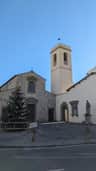
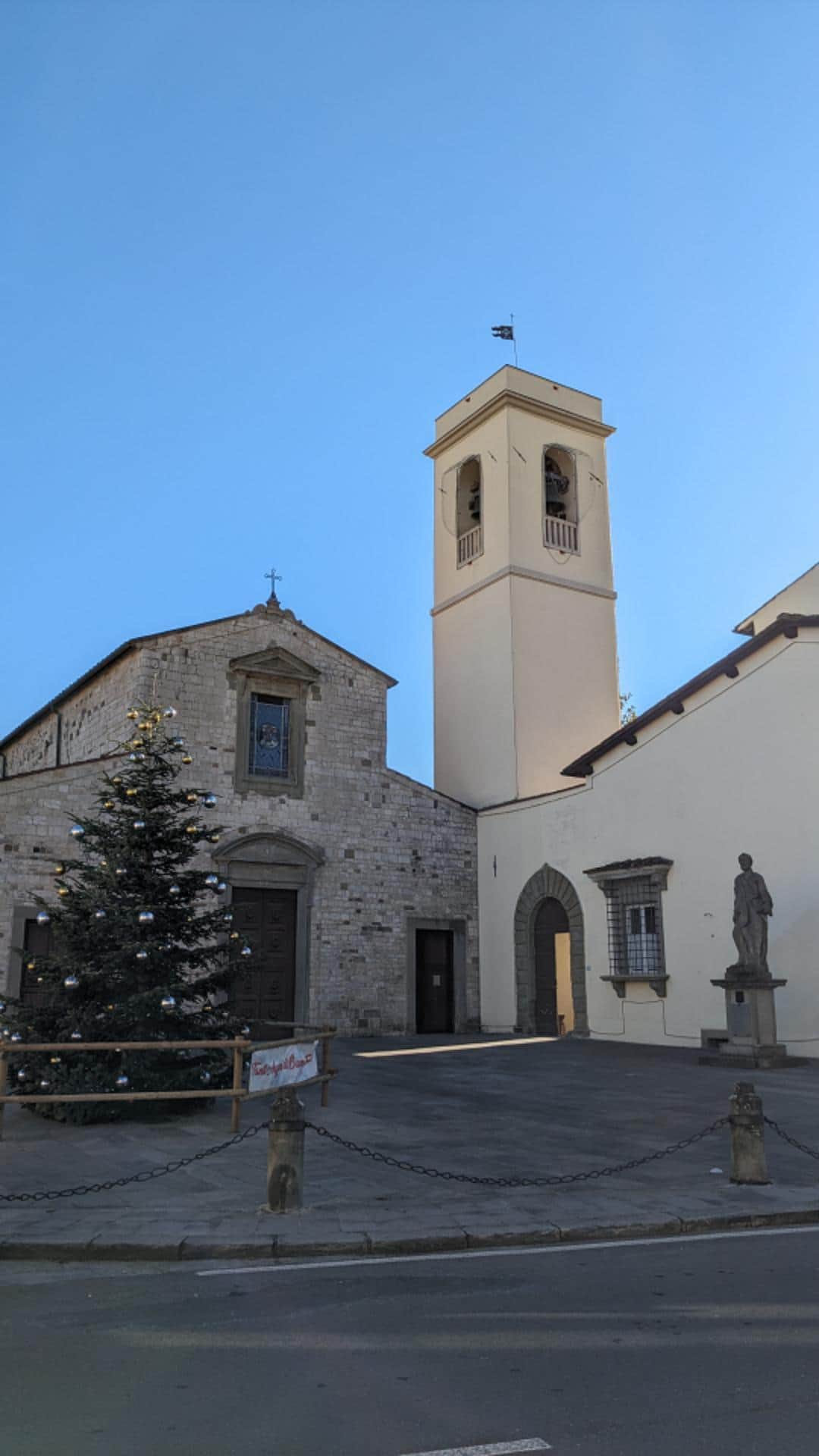
The Parish Church of San Pietro in San Piero is located along the Bolognese road, a major artery in the road network of this part of the Apennines.
Structure:
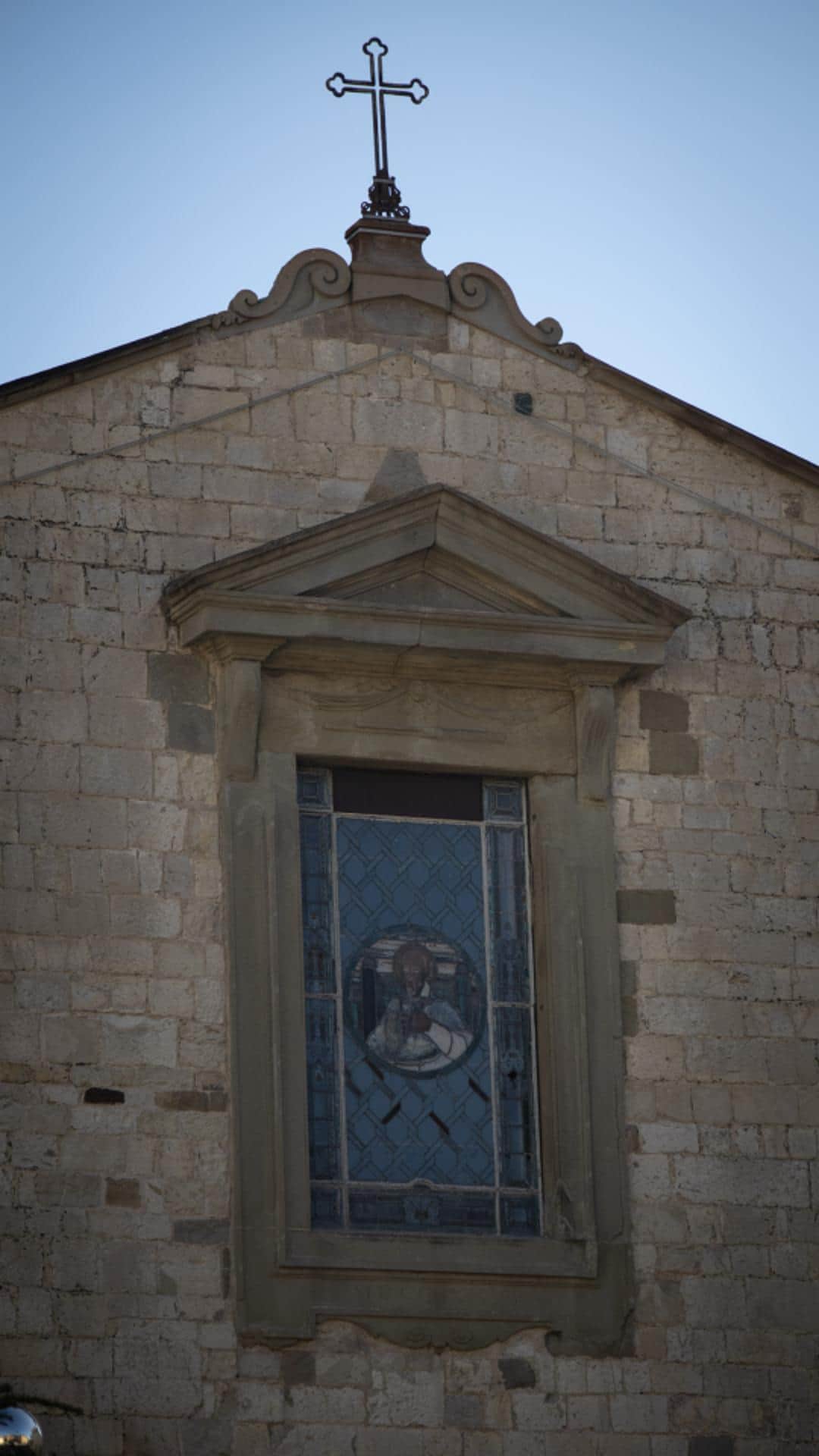
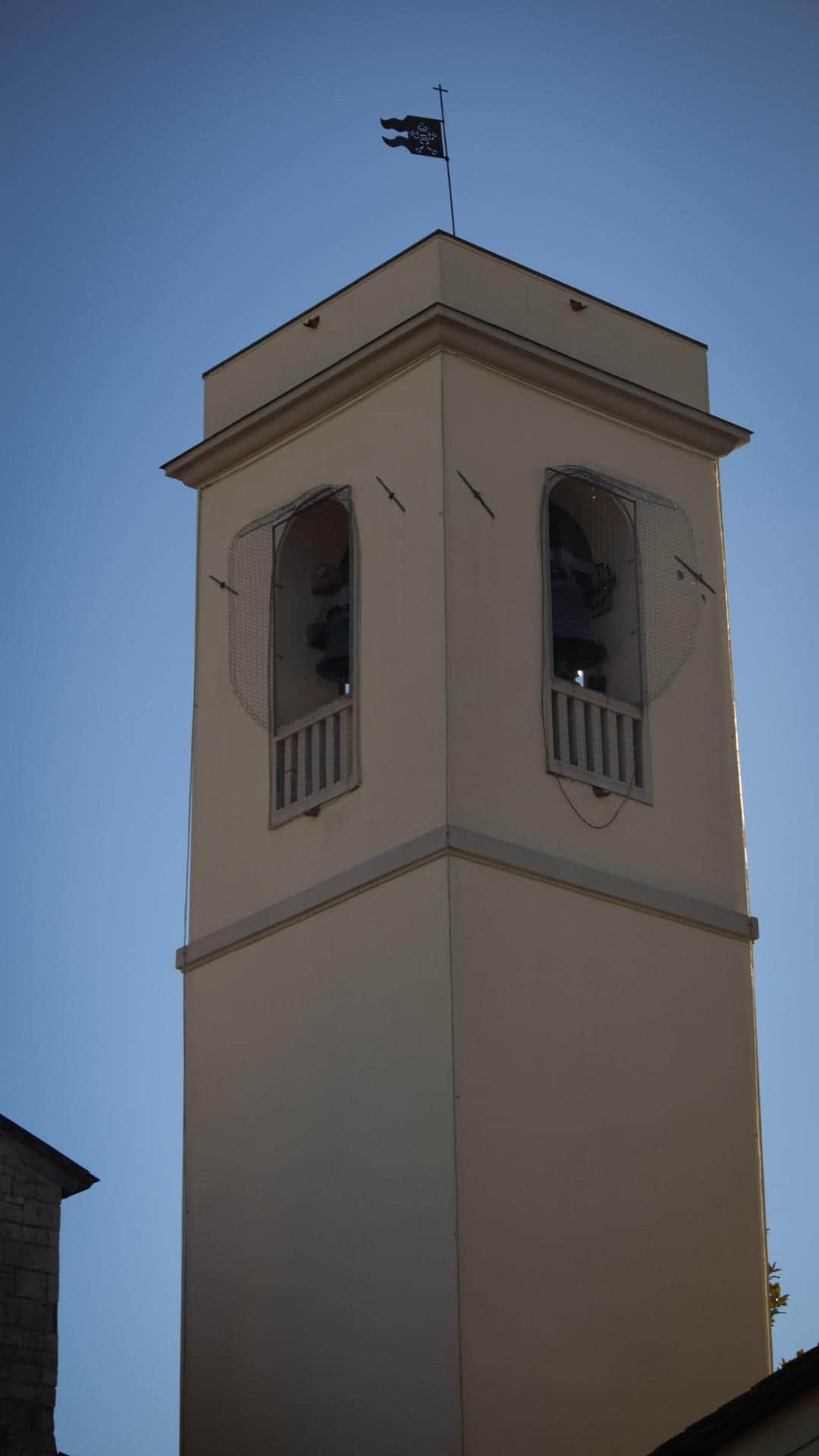
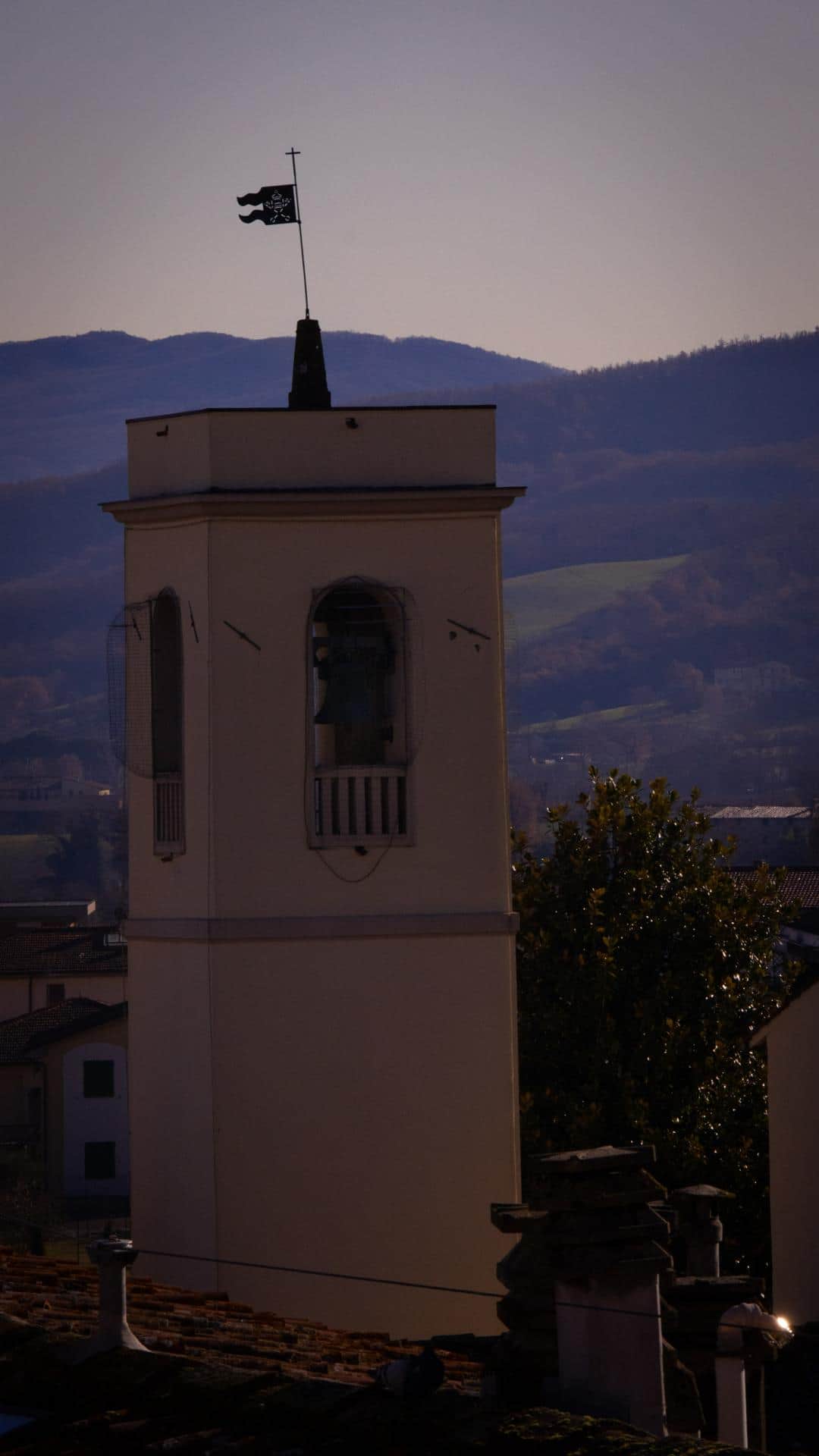
The building has a facade with four sloping sides, constructed with blocks of sandstone. Three portals open onto the facade, with the central one also featuring a Medici coat of arms. Above the main portal, there is a large rectangular window with a curvilinear frame, bearing the date 1771. On the right side of the facade stands the tower bell, dating back to 1607 but extensively rebuilt in 1906.
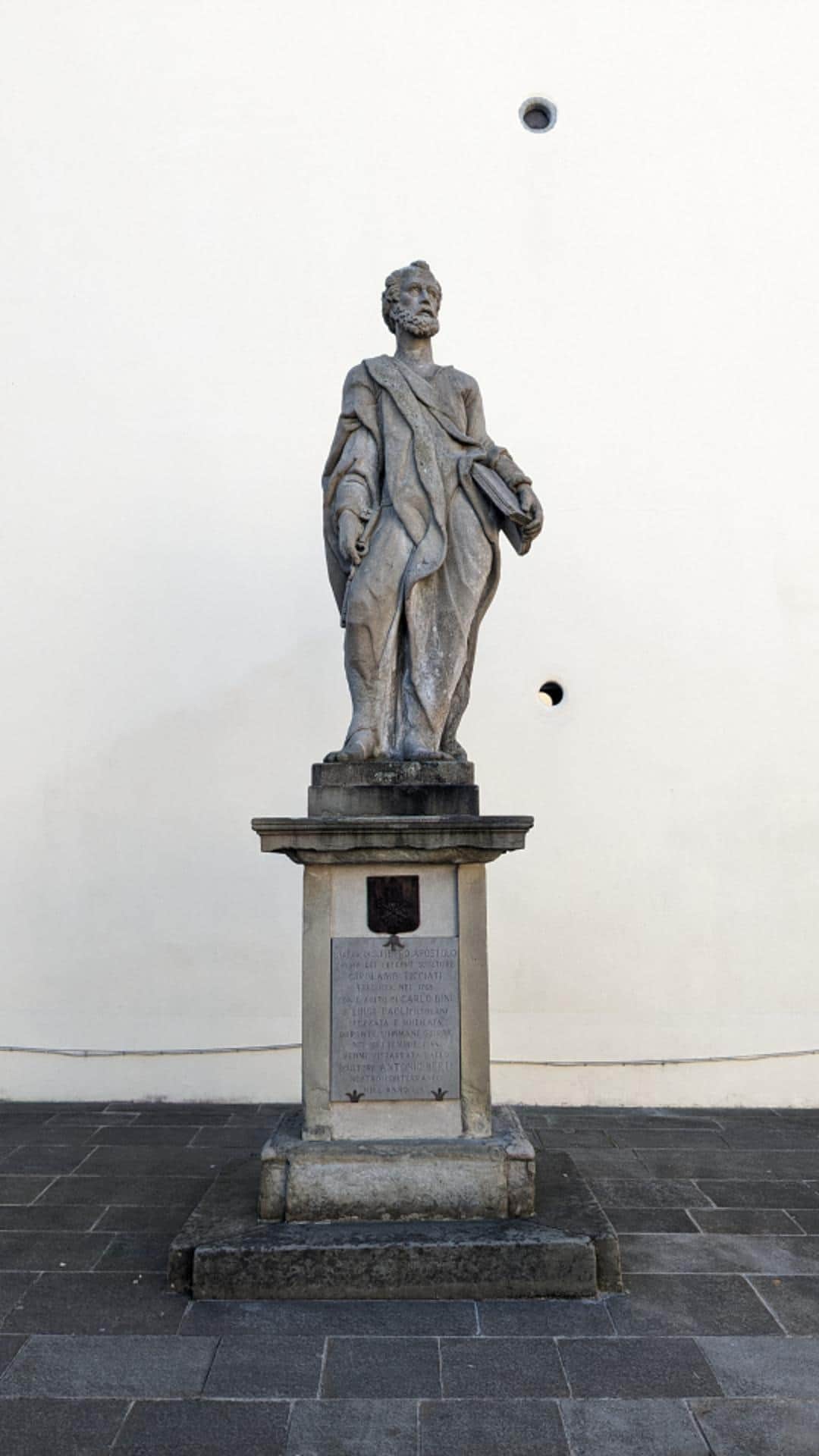
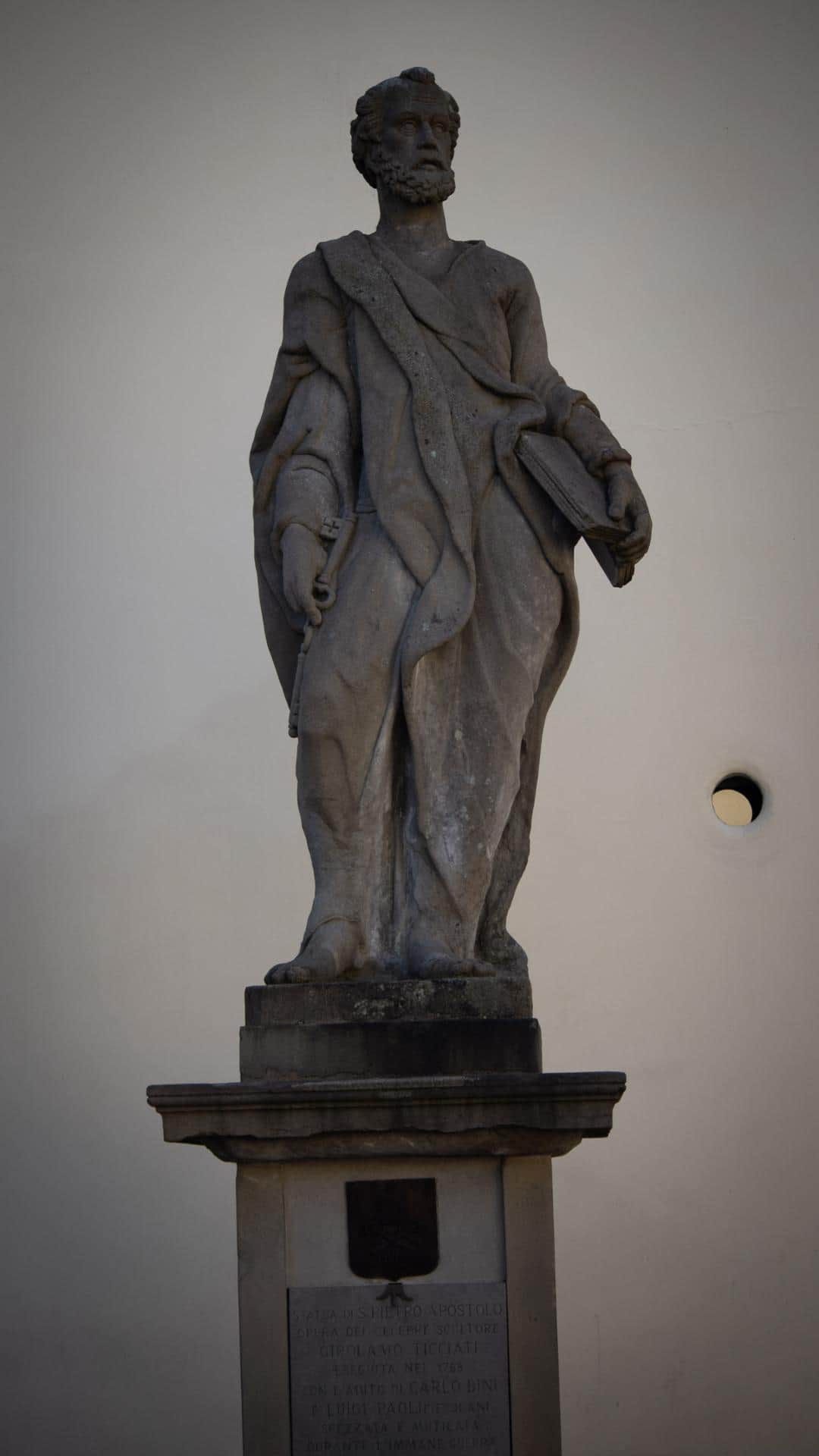
Outside the church, on the right side of the churchyard, there is a monumental stone statue of Saint Peter the Apostle, created in 1768 by Fiesole artists Carlo Bini and Luigi Paoli, and restored in 1944 by a young Antonio Berti.
Inside, entirely plastered, the space is divided into three aisles separated by square pillars supporting large round arches. The central nave is covered by a barrel vault, with remnants of the pre-existing decoration in the center, damaged during World War II. The side aisles have cross vault ceilings.
The monumental high altar with steps, created "Roman-style" in 1796, leads to the central chapel with a square plan, featuring a monumental painted figure of Saint Peter the Apostle dating back to 1935. Above the altar, there is a wooden Crucifix, recently stripped of its dark varnish, attributed to Raffaello da Montelupo.
On the two side walls, two stone altars are placed: the right one bears a canvas depicting Saints Anthony of Padua, Saint Bonaventure, and Saint Thomas Aquinas, attributed to a Florentine painter of the 17th century.
Historical Notes:
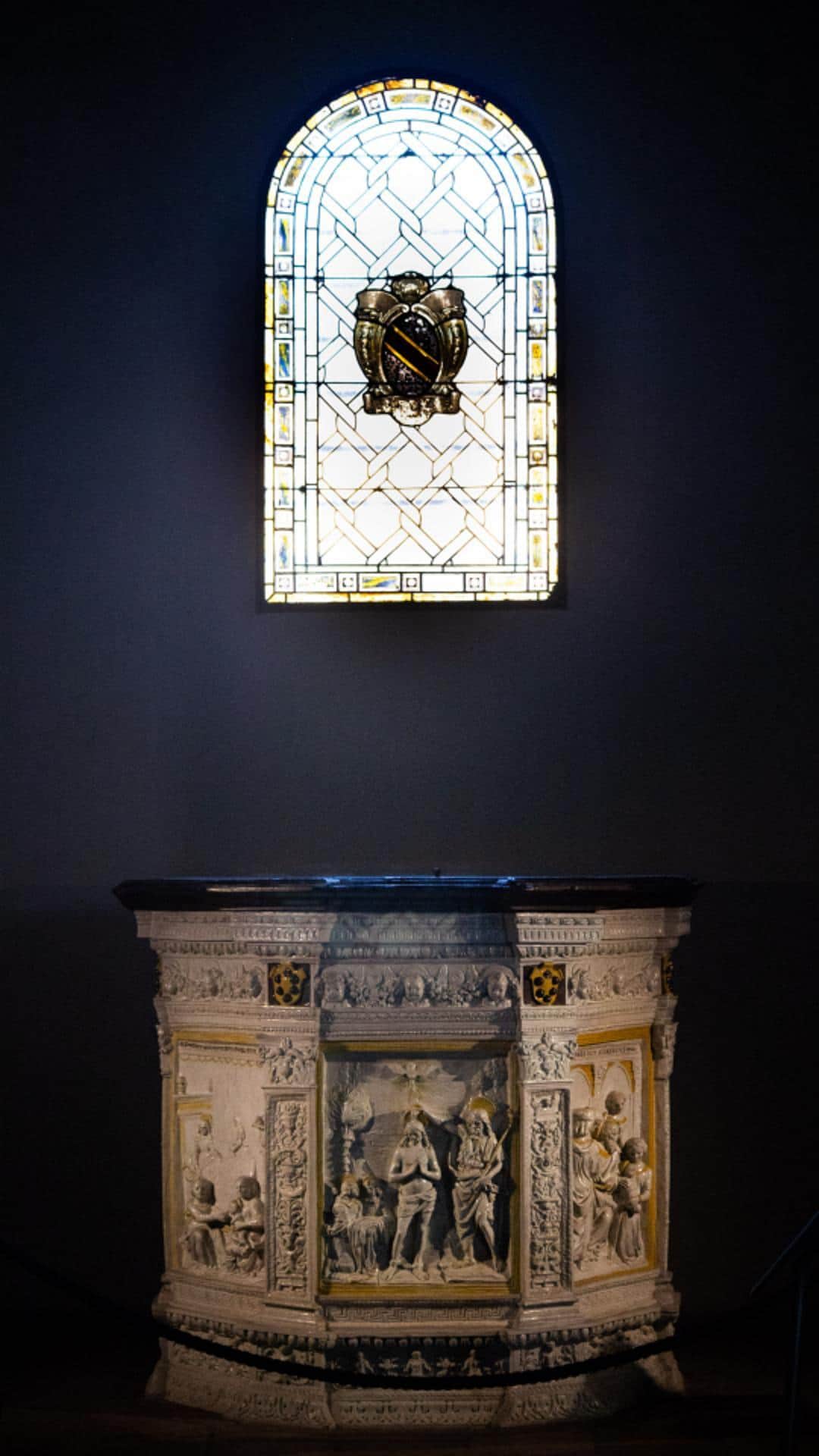
The parish church boasts a millenary history, with the first documented evidence of its existence dating back to 1018, though the structure is likely even older. In 1356, the Medici family acquired patronage over the parish, leading to significant changes in its history. The Medici family claimed the right to appoint parish priests and simultaneously acquired artworks and furnishings that enriched the church's heritage. The most important Medici parish priest was undoubtedly Bernardo di Antonio de' Medici, who initiated a significant renovation campaign.
Subsequently, the Medici family's interest waned, and the parish experienced a long period of decline and difficulties. The decline was notably halted by the efforts of Tommaso Poggini, who served as the parish priest from 1745 to 1781, initiating an extensive restoration campaign. The most substantial work focused on the interiors, which were entirely covered with stucco descriptions, no longer visible today. Minor works were also carried out by Poggini's successors.