Oratorio della Vergine di Piazza
Scarperia · Scarperia e San Piero · Firenze
On the south side of Piazza dei Vicari, at the corner with via San Martino, we find the Oratory of the Virgin of Piazza.
Structure:
It is believed that the original 14th-century oratory consisted of a three-bay loggia, closed at the back and on the sides, following the Florentine model. When observing the building from the square, its Renaissance appearance is evident. On the ground floor, between the two portals, there is a large window through which the Madonna can be admired from the outside. On the upper floor, three trilobed bifores are present, and at the center of the median, the emblem of the Company of Santa Maria is displayed. The second floor was added around the early 20th century.
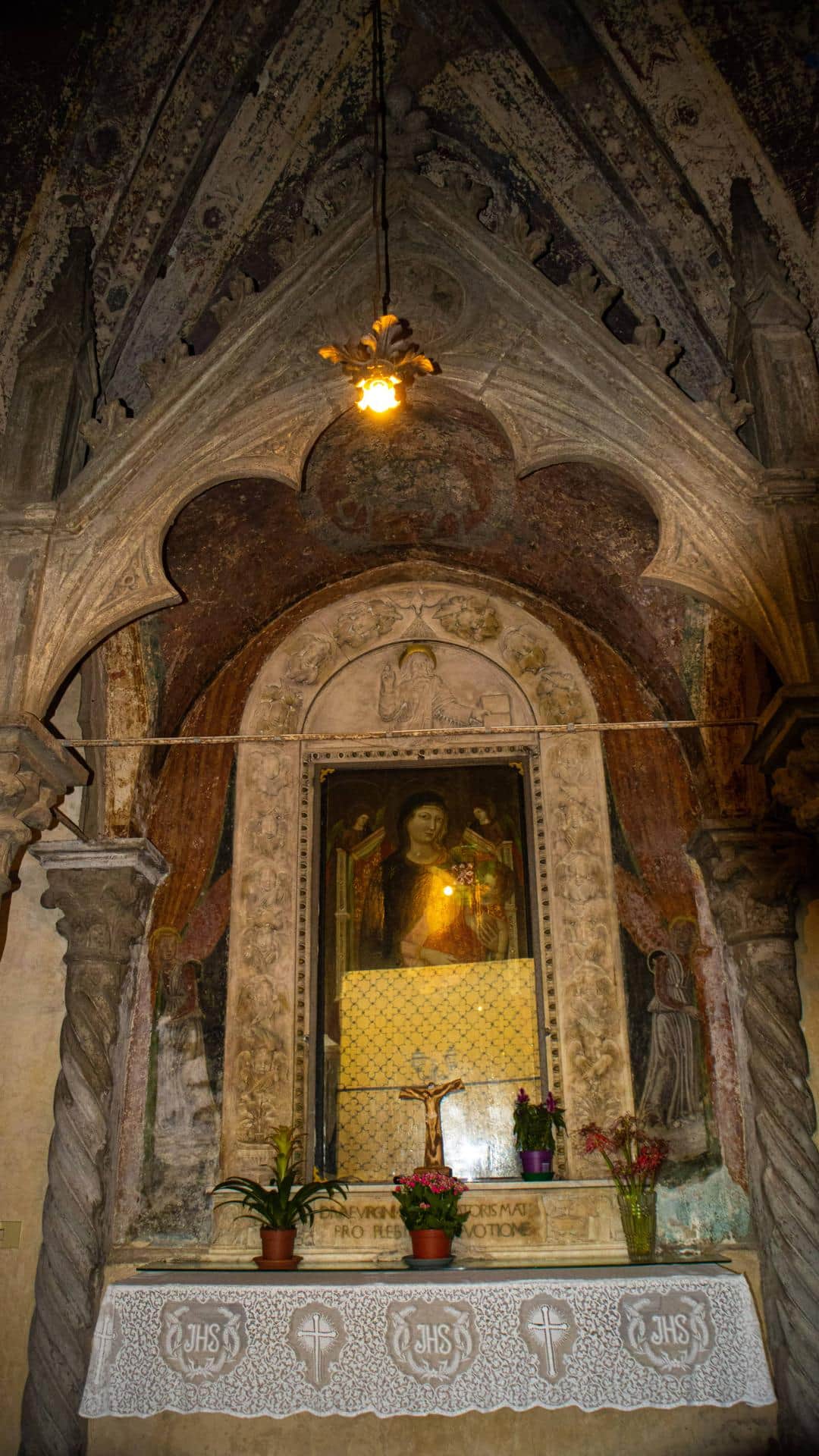
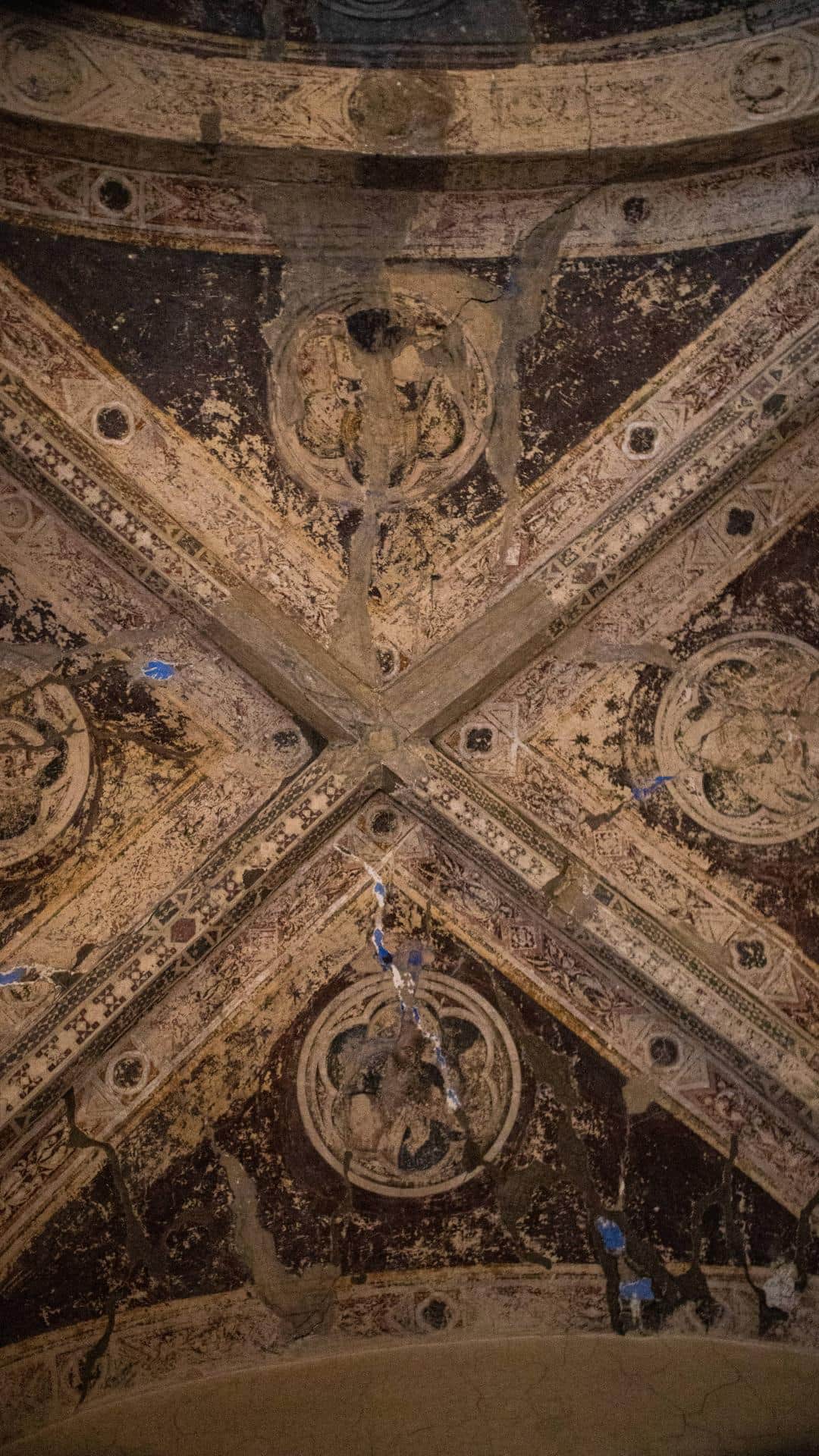
Inside, traces of the ancient structure can be seen in the two slender octagonal pedestals, on which ribbed cross vaults are set. In the center of the rectangular single nave, there is a monumental stone temple, crafted by Tuscan artisans in the 14th century. The tabernacle has a late Gothic appearance, with a canopy structure supported by four spiral columns. Inside the temple, the Madonna enthroned with Child is attributed to Jacopo del Casentino and was created between 1347 and 1349. The artwork is enclosed by the marble frame by Mino da Fiesole, featuring the Eternal Father in the center of the lunette, and on the sides, two rows of cherubs painted by Umberto Tedesco, a lesser-known painter.
Historical Notes:
The building is first documented in 1335, in a testamentary act that mentions the Company of the Blessed Virgin, which had its headquarters there until 1784 and was obliged to distribute bread to the poor "at the door of the oratory." The construction of the upper floor, used as a residence for the cheese maker and her family, dates back to 1484. Simultaneously, the loggia would have been closed, and the façade renovated. A few decades later, the violent earthquake of 1542 caused part of the ribbed vaults to collapse. In 1784, the oratory was suppressed and merged with the nearby Propositura dei Santi Jacopo e Filippo. The last significant restoration interventions date back to 1980.
-Giulio Landi