 Photo: cultura.ilfilo.net · croppedPhoto: cultura.ilfilo.net · cropped
MugelloHow far is it?
Pieve di San Cresci in Valcava
Description
The parish church of Saint Cresci in Valcava, in the municipality of Borgo San Lorenzo, dates to the 6th century. The oldest documentary evidence dates back to 941 and 1177. On the site there was probably a pagan temple, whose foundations were found in the excavations together with Roman coins, stones carved with snakes and bones of sacrificed animals. Here it is believed that the martyrdom of Saint Cresci occurred.
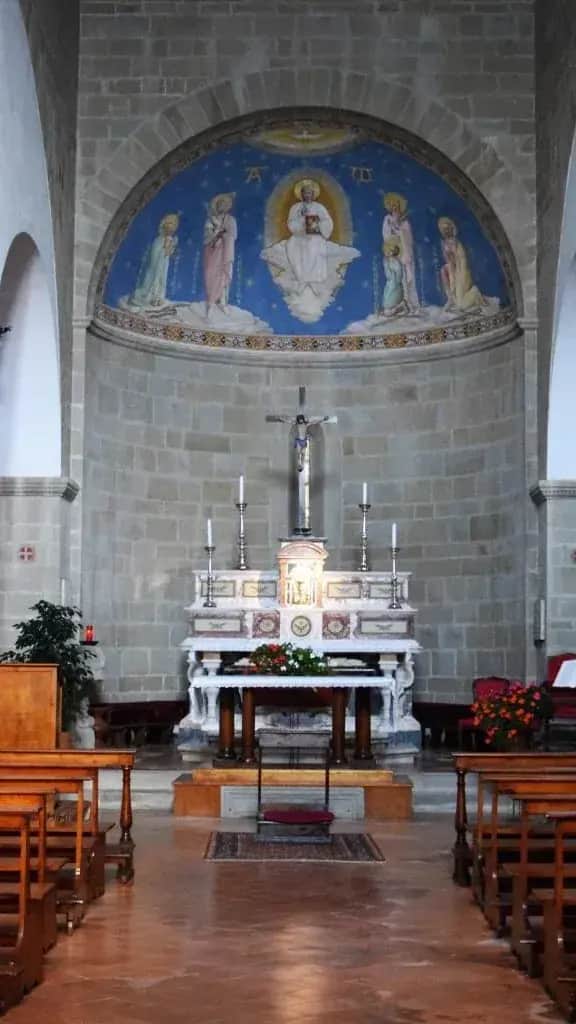
Today the church, part of a complex with a bell tower and a rectory, is a three-naved, single-apsed building. The interior is divided into three naves by large arches on square pillars. It preserves the polychrome marble altar with stepped bases designed by Foggini and frescoes on the History of the martyrdom of Saint Cresci, by Ademollo, damaged by the 1919 earthquake; there are also the Decapitation of Saint Cresci by Francesco Lapi (1615) and works by Carlo Ventura executed on commission for Cosimo III.
The parish church is ironically cited in Boccaccio's Decameron in the seventh tale of the second day, which features Alatiel, daughter of the sultan of Babylon, as the protagonist, to denote the male member.
Useful information: on August 7 the Festival of Saint Cresci in Valcava will be held, with Vespers in the parish church at 17:45 and a classical music concert in the same parish church at 18:15.
Text generated with the support of AI
Public PlacePoint of interest